
Deviated Septum Symptoms and What to Do About Them
Do you constantly struggle to breathe through one side of your nose? Wake up with a dry mouth because you’ve been breathing through it all night? Experience frequent sinus infections that never seem to fully resolve? You might be dealing with a deviated septum.
A deviated septum is one of the most common nasal conditions. While many people live with minor deviations without issue, a significantly deviated septum can cause persistent symptoms that impact quality of life, sleep, and overall health.
What Is a Deviated Septum?
Your nasal septum is the wall of cartilage and bone that divides your nose into two separate chambers. Ideally, this wall sits in the center, creating two equal nasal passages. However, when the septum is off-center or crooked, it’s considered deviated.
A deviated septum can range from mild (slightly off-center) to severe (dramatically blocking one nasal passage). The more severe the deviation, the more likely you are to experience bothersome symptoms.
What Causes a Deviated Septum?
Most deviated septums result from one of two causes:
- Congenital: Many people are born with a deviated septum or develop one during childhood growth
- Injury: Trauma to the nose from sports injuries, accidents, or falls can shift the septum out of position
Sometimes, aging and normal wear on nasal structures can also contribute to or worsen an existing deviation.
Common Deviated Septum Symptoms
Not everyone with a deviated septum experiences symptoms, but when they do occur, they can significantly affect daily life. Here are the most common signs:
Difficulty Breathing Through Your Nose
This is the hallmark symptom of a deviated septum. You may notice that one nostril is consistently more blocked than the other, or that breathing through your nose requires more effort than it should. Many people find themselves unconsciously breathing through their mouths, especially during physical activity or sleep.
Chronic Nasal Congestion
If you feel perpetually stuffed up despite not having a cold or allergies, a deviated septum could be the culprit. The blocked nasal passage makes it difficult for mucus to drain properly, leading to persistent congestion.
Frequent Sinus Infections
When your nasal passages can’t drain effectively due to structural blockage, mucus builds up and creates an ideal environment for bacterial growth. People with a deviated septum often experience recurring sinus infections that seem to appear out of nowhere.
Nosebleeds
The altered airflow caused by a deviated septum can dry out the nasal lining on one side more than the other, making that side prone to frequent nosebleeds, especially during dry winter months.
Facial Pain or Pressure
Blocked drainage and chronic inflammation can lead to pressure and pain around your nose, cheeks, forehead, and between your eyes. This discomfort often worsens when you bend forward or lie down.
Loud Breathing and Snoring
The restricted airflow through your nose can cause noisy breathing during the day and snoring at night. Your sleeping partner may have noticed this more than you have.
Sleep Problems
Many people with a deviated septum struggle with sleep apnea or poor sleep quality because they can’t breathe properly through their nose. This leads to mouth breathing, frequent waking, and feeling unrested in the morning.
Postnasal Drip
When mucus can’t drain properly through your nose, it drips down the back of your throat instead. This causes that annoying sensation of constantly needing to clear your throat and can lead to chronic cough.
Preference for Sleeping on One Side
Do you always sleep on the same side? People with a deviated septum often unconsciously favor sleeping on one side because it allows the more open nasal passage to be on top, making breathing easier.
How Is a Deviated Septum Diagnosed?
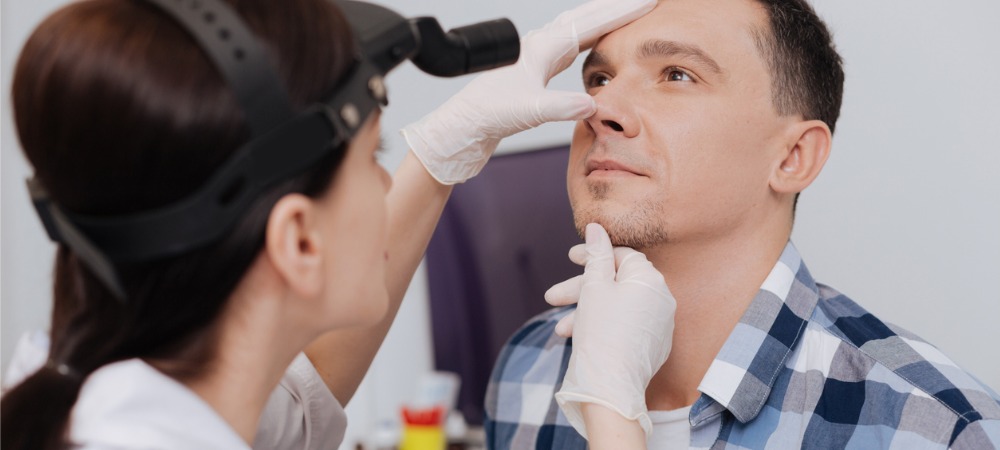
If you’re experiencing several of these symptoms, it’s worth getting evaluated by an ENT specialist. Diagnosis typically involves:
- Physical Examination: Your doctor will use a bright light and nasal speculum to look inside your nose and assess the position of your septum.
- Nasal Endoscopy: A thin, flexible tube with a camera may be inserted into your nose to get a detailed view of your nasal structures and identify the severity of the deviation.
- Imaging: In some cases, a CT scan may be ordered to see the full extent of the deviation and check for other contributing factors like polyps or chronic sinusitis.
Treatment Options for a Deviated Septum
Treatment depends on the severity of your symptoms and how much the deviation affects your daily life.
Conservative Management
For mild symptoms, your doctor may first recommend:
- Decongestants: Temporary relief from nasal congestion
- Antihistamines: If allergies are contributing to inflammation
- Nasal steroid sprays: Reduce inflammation and swelling
- Saline irrigation: Helps keep nasal passages clear
- Nasal strips: Can temporarily improve breathing during sleep
While these approaches can help manage symptoms, they don’t correct the structural problem and won’t provide permanent relief.
Surgical Treatment: Septoplasty
For moderate to severe deviated septums causing persistent symptoms, septoplasty is the gold standard treatment. This surgical procedure straightens the septum by trimming, repositioning, or removing the deviated portions.
What to Expect:
- Usually performed as an outpatient procedure
- Done under general or local anesthesia
- Takes about 60-90 minutes
- Recovery typically takes 1-2 weeks
- Most patients experience significant improvement in breathing and symptom relief
Many people who undergo septoplasty wish they’d done it sooner, as the improvement in quality of life can be dramatic.
Complementary Procedures
Sometimes, a deviated septum occurs alongside other conditions that can be addressed simultaneously:
- Turbinate reduction: Shrinks enlarged turbinates that contribute to blockage
- Balloon Sinuplasty: Opens blocked sinus passages for better drainage
- Functional rhinoplasty: Addresses external nasal valve collapse
At the Ear & Sinus Institute, we specialize in comprehensive evaluations to identify all factors contributing to your breathing difficulties and create a personalized treatment plan.
When Should You See a Specialist?
Consider making an appointment if you’re experiencing:
- Chronic nasal obstruction affecting your daily activities
- Frequent sinus infections (three or more per year)
- Sleep disturbances due to breathing difficulties
- Persistent facial pain or pressure
- Regular nosebleeds
- Symptoms that don’t improve with medication
You don’t have to live with constant congestion and breathing difficulties. A deviated septum is a treatable condition, and addressing it can dramatically improve your comfort, sleep, and overall health.
Get Relief from Your Deviated Septum Symptoms
If you’re tired of struggling to breathe through your nose or dealing with recurring sinus problems, it’s time to get answers. The specialists at the Ear & Sinus Institute have extensive experience diagnosing and treating deviated septums and related nasal conditions.
Ready to breathe easier? Contact the Ear & Sinus Institute to schedule an appointment. Serving Fort Worth, Arlington, Dallas, and surrounding areas, we’re committed to helping you find lasting relief through advanced, minimally invasive treatment options.
Search Blog Posts
Most Recent Keywords
Sinus, Headache, Smell, Breath, Ear, Surgery, Pollen, Sinuplasty, Nose and Sinus, Sleep, Snooring, Procedure,
Most people associate ear tubes with young children and repeated ear infections. It's one of the most common pediatric procedures performed in the United States. But ear tubes for adults are more common than many people realize, and for those…
An infected ear canal brings more than just discomfort. That sharp, burning pain that gets worse when you touch your ear or try to sleep on that side can seriously disrupt your day. Whether you recently went swimming, cleaned your…
That muffled, underwater feeling in your ear can be incredibly frustrating. Whether it happened suddenly after a flight, gradually developed during a cold, or appeared seemingly out of nowhere, a clogged ear disrupts your daily life in ways you might…
Do you constantly struggle to breathe through one side of your nose? Wake up with a dry mouth because you've been breathing through it all night? Experience frequent sinus infections that never seem to fully resolve? You might be dealing…
Winter in Texas might not bring blizzards, but it does bring something that catches many people off guard: frequent nosebleeds. If you've noticed more nosebleeds during the colder months, you're not imagining things. The combination of dry winter air, indoor…
You blow your nose and notice the tissue has an unmistakable green tinge. Naturally, your first thought might be: "Am I sick? Do I have an infection?" It's one of the most common questions we hear at our practice, and…
Ear infections are incredibly common, especially in children, but they can affect adults, too. Whether you’re a parent dealing with recurring ear infections in your child or you're battling ear pain yourself, it’s natural to wonder: are ear infections contagious?…
Few things are more frustrating than stepping out of the pool, lake, or shower and realizing your ear feels blocked. That sloshy, muffled sensation is often harmless, but sometimes, trapped water in the ear can lead to irritation or even…
If you've ever experienced that heavy, aching feeling behind your cheeks, eyes, or forehead, you're not alone. Sinus pressure is one of the most common symptoms of sinus-related issues, and it can make even the simplest tasks feel miserable. At…
We’ve all experienced this: you or your child wakes up with a stuffy nose, and when you reach for a tissue, you notice something alarming: yellow snot. It’s natural to wonder what that means. Is it a sign of infection?…
If you or your child has ever battled a sinus infection, you know how frustrating and uncomfortable it can be. The congestion, pressure, facial pain, and endless tissues can really take a toll. But one question we hear often is:…
Inner ear infections aren't just uncomfortable; they can disrupt your balance, hearing and daily life. While outer and middle ear infections tend to be more common, infections of the inner ear can cause a very different set of symptoms. At…
A runny nose can be more than an inconvenience—it may signal allergies, infections, or environmental irritants. Finding out how to get rid of a runny nose is essential for restoring comfort and preventing further complications. If you're suffering from a…
For those experiencing a persistently dry nose, discomfort can quickly escalate into more serious issues like irritation and nosebleeds. Maintaining proper moisture in the nasal passages is essential for overall respiratory health. A range of natural, accessible strategies has proven…
Mouth breathing is a habit that can significantly impact your overall health, affecting everything from oral hygiene to sleep quality. While we can all occasionally find ourselves breathing through our mouths — especially during intense exercise or when dealing with…
Experiencing a sore throat and ear pain can be uncomfortable and disruptive, especially when the underlying cause isn’t immediately clear. These symptoms often occur together because the throat and ears are closely connected through the eustachian tubes, making it easy…
Musical ear syndrome (MES) is a rare auditory phenomenon where individuals, often with hearing loss, experience phantom sounds — typically music or singing — without any external source. Unlike the common experience of getting a tune stuck in your head,…
A double ear infection, also known as bilateral otitis media, occurs when both ears are infected simultaneously. While ear infections are more common in children, adults can also experience them. Double ear infections tend to be more severe and uncomfortable…
Traveling by plane is convenient and one of the most popular ways to get from one place to another. However, it's not always a smooth ride and can sometimes cause discomfort, especially in the ears. This is known as airplane…
Living with tinnitus can be challenging. The constant ringing, buzzing, or humming in your ears can affect your concentration, sleep, and overall quality of life. While there is no cure for tinnitus, there are effective strategies to manage the symptoms…
Whether it's due to aging, exposure to loud noises, or an underlying health issue, recognizing the signs of hearing loss can significantly affect treatment outcomes and quality of life. At the Ear & Sinus Institute, we are dedicated to educating…
Our ears play a crucial role in our daily lives, allowing us to hear and maintain balance. Keeping them clean is essential for good ear health and preventing infections. Knowing how to clean your ears at home can help remove…
Waking up with a headache is hardly the ideal start to anyone’s day, and when sinuses are involved, the discomfort can be particularly debilitating. Sinus headaches in the morning can disrupt your routine and affect your quality of life. What…
Have you ever wondered if that musty smell in old buildings could be affecting your health? For many experiencing chronic sinus issues, the answer might be lurking in their environment, particularly in the form of mold. At the Ear &…
Ear pain when swallowing can interfere with your daily life, making eating, drinking, and even speaking challenging. The interconnected nature of the ear, nose, and throat means that issues in one area can affect others, making it important to identify…
Experiencing a crackling sound in the ear can be more than just a minor annoyance. It can be a sign that something is amiss within your auditory system. This peculiar sensation often leaves individuals puzzled and seeking answers. The crackling…
Inner ear infections are a common ailment that may cause significant discomfort and potentially lead to serious complications if not treated effectively. Knowing the causes of an inner ear infection can help you take preventative measures and seek appropriate treatment…
Sinus pressure is a common complaint among those who suffer from sinus infections, allergies, or other respiratory conditions. This pressure often leads to discomfort and can cause significant disruptions to daily life. But what exactly is sinus pressure? Understanding the…
If you or someone you know is considering septoplasty, you're likely wondering what to expect during the recovery process. Septoplasty is a common surgical procedure performed to correct a deviated septum, which may lead to breathing difficulties, snoring, and other…
Hearing aids have transformed the lives of millions, offering a bridge to a world of sound for those with hearing impairments. These tiny devices, often discreetly tucked behind the ear, are technological marvels. But have you ever stopped to wonder,…
A deviated septum can be more than just a minor inconvenience. It may lead to breathing difficulties, sleep disturbances, and recurrent sinus infections. The good news is there are effective deviated septum treatment options available. This comprehensive guide will assist…
Otosclerosis, also called otospongiosis, is a condition many might not have heard of, but its effects on hearing can be profound. This progressive ear disorder involves the bones of the middle ear, leading to hearing loss. But how exactly does…
Our sense of hearing plays a crucial role in our everyday lives. A hearing test can help ensure we can hear clearly, communicate effectively, enjoy our favorite music, and remain alert to the sounds of our environment. However, many of…
Tinnitus is a condition that causes a person to hear sounds, such as ringing, buzzing, or whistling, even when no external sound source is present. Living with tinnitus may be difficult, and finding tinnitus relief can be challenging. Surveys suggest…
Balance is a fundamental aspect of our daily lives, enabling us to maintain stability, move confidently, and navigate the world around us. However, for many individuals, having a balance disorder can disrupt these essential functions and significantly impact their quality…
Concerts are a great way to see some of your favorite bands perform live and experience the music you love. However, listening to loud music for prolonged periods of time may take a toll on your ears, leading to hearing…
Having itchy ears may be quite bothersome, and you might be inclined to scratch your ear to try and find relief. However, before you reach for a cotton swab, consider these natural home remedies for itchy ears. The Ear &…
Tinnitus, commonly known as ringing in the ears, is a condition that affects millions of people worldwide. The sounds you hear may be buzzing, humming, or whistling and can range from low to high in pitch and intensity. Tinnitus may…
In today's world, it seems like nearly everyone is using headphones to listen to their favorite music, podcasts, or audiobooks. However, whether you are using your headphones for work, school, or leisure, it is essential to be aware of the…
Swimmer's ear, also known as otitis externa, is an inflammation and infection of the outer ear canal caused by bacteria or fungi. As the name suggests, swimmer's ear is commonly caused by water remaining in the ear after swimming, which…
Your nose and throat are connected by a small passageway called the nasopharynx. The glands in your nose and throat produce mucus to clean your nasal lining, moisten the air you breathe, and help fight infection. Normally, you swallow this…
Your throat is responsible for a multitude of tasks. Not only does it allow you to speak, but it also helps you swallow and breathe, both functions which are integral to your survival. Unfortunately, the throat is almost always in…
As the seasons change, you may begin to notice your allergies act up more than usual. Seasonal allergies may be a nuisance, making it difficult to enjoy the outdoors and leaving you feeling miserable. Sneezing, watery eyes, and trouble breathing…
Do you often feel like the room is spinning? Do objects in your field of vision seem to move when you don't? If so, you may be experiencing vertigo, a sensation that the world around you is spinning. Fortunately, there…
Ear tubes may go by several names, such as myringotomy tubes, tympanostomy tubes, ventilation tubes, or pressure equalization tubes. Regardless of what they're called, ear tubes are tiny cylinders that are placed in the eardrum during a minor surgical procedure.…
Dealing with a stuffy nose can be pretty annoying and frustrating, especially when it feels like no matter how many times you blow your nose, the congestion won't go away. The causes of a stuffy nose range from allergies to…
A sinus infection is one of the most common reasons for a clinical visit in the US. Also referred to as sinusitis, a sinus infection is a condition where the tissue that lines the sinuses becomes inflamed. The sinuses are…
Having a hard-to-reach itch can be frustrating, especially when it's in a sensitive area like your ear canal. Having an itchy ear may be caused by a number of factors. The good news is that most cases can be treated…
Have you ever come out of the pool after a long day of swimming and felt an intense pain in your ear? Or maybe you were flying in an airplane, and your ears hurt so badly that you had to…
Have your ears ever made things sound like you were underwater? This sensation is a common symptom of a clogged ear. You may begin to worry that your clogged ear might not go away. However, before you schedule your next…
One of the most critical parts of a person's ear is the eardrum. This thin piece of tissue separates the air-filled outer and middle ears from the liquid-filled inner ear. Cholesteatoma is a growth that develops on or inside any…
Although experiencing a dry throat may not be an immediate cause for concern, you may be wondering if your dry throat is an indicator of a more serious condition. Therefore, it is critical to know what is causing your scratchy…
Nosebleeds can happen for a variety of reasons, from a dry climate to picking your nose. But for some people, nosebleeds are a recurring problem. If you have a history of frequent nosebleeds, it’s important to understand the causes and…
Post-nasal drip is a condition where the mucous membranes in your nose are irritated and produce excess mucus. It can cause several symptoms, including sore throat, cough, stuffy nose, congestion, sneezing, and difficulty breathing. The most common causes of post-nasal…
The eustachian tubes are located on each side of the face and connect the middle ear to the back of the throat and nose. These tubes usually remain closed, but they open up whenever you swallow, chew, or yawn. If…
Rhinitis is the swelling and irritation of the mucous membranes in the nose. It is typically triggered by breathing in allergens such as dust mites, pollen, spores, and animal dander. However, rhinitis can also be triggered by changes in your…
Earwax, also known as cerumen, is a sticky substance secreted by glands in the ear canal of humans and other mammals. It plays an important role in your body by stopping foreign particles from entering the ears. Earwax actually serves…
A blocked or stuffy nose can be very painful and uncomfortable, and is usually the result of nasal congestion. Nasal congestion occurs when the nasal cavity becomes clogged with excess mucus, often due to an allergic response or infection. The…
Ménière’s disease is a chronic inner ear disorder that causes episodes of vertigo, and fluctuating hearing loss. Although it cannot be cured, Ménière’s disease can be managed to improve your quality of life. Ménière’s Disease Symptoms The main symptom of…
It can be challenging to live with hearing loss. Hearing loss can make it difficult for people to concentrate and perform daily tasks. It also causes people to withdraw from social situations. As a result, hearing problems can lead people…
Nosebleeds, also known as epistaxis, occur when tiny blood vessels in the nose break, causing a sudden flow of blood from one’s nostrils. Nosebleeds are very common, as over 60% of people will experience at least one nosebleed in their…
Nasal rinses are usually used to help with congestion or a stuffy nose. They can be done by either pouring water, salt water, or saline solution into your nose and then blowing it out. Nasal rinses help soothe the tissues…
Nasal polyps are benign inflammatory lesions that are caused by mucosa of the nasal cavity or one or more of the nasal sinuses, such as the middle meatus and ethmoid regions. Nasal polyps present themselves as semi-translucent, pale grey growths…
Over 30 million Americans have experienced a degree of hearing loss throughout their lifetime. Hearing loss can occur at any age and can drastically alter a person’s life. People who experience hearing loss may become frustrated, angry, or depressed, which…
Everyone has 4 different types of sinuses: maxillary (cheekbones), frontal (forehead), ethmoid (between the eyes), and sphenoid sinuses (behind the nose). Together, they make up an interconnected web of hollow cavities. Sinuses are lightly lined with mucus and help to…
As the weather gets warmer, there is an increase in pollen and mold in the environment which triggers the dreaded allergy symptoms. Pollen season can start as early as February and last through October, depending on your location’s weather patterns. …
An ENT, also called an Otolaryngologist, is a specialized physician who has completed extensive training in the diagnosis and treatment of ear, nose, and throat disorders and injuries. ENTs treat a wide range of issues, ranging from acute to chronic. …
As the weather gets warmer and the days get longer, allergy symptoms start up again for many people due to the increased pollen production. Other allergens can include dust mites, pet dander, and mold spores. Common symptoms include sneezing, runny…
When a person has recurring ear infections, it can result in hearing loss, speech and balance issues, and poor school/work performance. When ear infections become chronic, ear tubes are often the best resolution. Ear tubes are tiny cylinders that are…
Ear problems can be extremely uncomfortable and unpleasant, especially when they last for days or weeks at a time. They can cause mild pain or discomfort inside the ear, hearing loss and even pain when swallowing. There are many different…
With cooler weather, you may notice your spring allergies have gone away and you’re able to breathe better. However, if you think that allergens aren’t present during the winter, think again. If you spend more time indoors during the cold…
If there is one personal hygiene task you need to take off your to-do list, it’s this: stop cleaning your ears with cotton swabs. According to the American Academy of Otolaryngology/Head and Neck Surgery Foundation, experts strongly discourage twirling cotton-tipped…
Nothing is worse than feeling congested and unable to breathe out your nose. A stuffy nose and headache are signs of many illnesses, including the common cold. When you’re past the point of having a cold, your symptoms are likely…
If your nose is regularly stuffy and you get earaches often, this may be a sign it is time to visit an ear, nose, and throat (ENT) doctor. ENT specialists can help you with all problems that are related to…
Itchy ears and throat can be a sign of a few different conditions, including allergies and the common cold. These symptoms are usually no cause for concern and can often be treated at home. However, these symptoms can also be…
Earaches can cause debilitating pain, making it difficult to sleep, eat, and drink. The most common cause of ear pain is ear infections. When the ear becomes infected, inflammation and pressure can cause intense pain. However, earaches are not always…
Have you ever stood up quickly and felt dizzy? Or maybe experienced a rush of dizziness while talking to coworkers at work? You aren’t alone. In fact, approximately 40% of the U.S. population will experience some form of dizziness or…
Hearing loss can happen to anyone at any age and affect one’s quality of life, health, relationships, and career. Many people who experience hearing loss do not pick up on the signs until their lives are negatively affected. Just like…
Ear pressure can be an uncomfortable feeling when one or both of your ears feel clogged. Ear pressure occurs when the eustachian tube becomes partially or completely blocked as a consequence of common colds, allergies, or sinusitis. When the eustachian…
A nose and sinus condition can make you feel your absolute worst, causing painful pressure behind your eyes and making your nose run endlessly. Over 35 million people suffer from chronic sinusitis each year, making it one of the most…
Molds are a form of fungus that can grow anywhere that moisture and oxygen are present. Mold growth often occurs when excessive moisture accumulates, causing many health risks to individuals. Common forms of indoor molds include: Acremonium: This mold…
After temporarily closing our office due to the recent pandemic, the Ear and Sinus Institute is pleased to announce that we are reopening on May 20! We appreciate your patience during this time as we transition to a reduced schedule…
Tinnitus is described as a ringing in the ears. It may be soft or loud, high pitched or low pitched. Millions of Americans experience tinnitus, making it one of the most common health conditions in the country. The U.S. Centers…
Spring is in the air, which means allergy season is just getting started. Allergies occur when your immune system reacts to a foreign substance. The reaction can inflame sinuses and airways leaving you with a runny nose or watery eyes.…
Dr. Marc Dean is a board-certified otolaryngologist, commonly known as an Ear, Nose and Throat (ENT) specialist with a long and successful background in the telemedicine industry. He attended Baylor University for his undergraduate studies in bioinformatics and earned his…
This week, the American College of Surgeons provided the recommendation that both healthcare facilities and clinicians should prioritize urgent and emergency visits and procedures now and for the coming several weeks. Specifically, they recommend delaying inpatient and outpatient elective surgical…
The COVID-19 virus is completely changing our daily routines and habits. School is being held online, professionals are now working from home and some cities are even on lockdown to stop the spread of the virus. It is extremely important…
Spring allergies may be just around the corner, but indoor allergies are an annoyance that lasts year-round. Common indoor allergies include dust mites, cockroaches, mold, and pet dander. While you cannot control pollen counts outside, there are things you can…
Sinus congestion has many reverberating symptoms that can ruin your day and put you out of commission. Sinus congestion is the fullness you feel in various areas across your face, head and neck caused by a blockage in the sinus…
It is estimated that at least 25 million people own Airpods, the wireless Bluetooth earbuds created by Apple. That means at least 25 million people are walking the busy streets of their city listening to music, podcasts, or other audio…
Doctors hear this question all of the time. The short answer is yes, Q-tips are bad for your ears. Ear wax buildup can be bothersome, but cotton swabs may be making your problems worse. While most people do not need…
While seasonal allergy sufferers may despise springtime due to their chronic sinusitis, others may notice that the cool fall and winter air worsen their sinus symptoms. The last thing we want during the holiday season is to get sick, so…
Dr. Marc Dean is the head physician at the Ear and Sinus Institute, serving the greater Fort Worth area. As a board-certified otolaryngologist, he specializes in ear and sinus disorders. Dr. Marc Dean: Top Doc Once Again For several years,…
You may be surprised to hear that many people who think they are suffering from a sinus headache are actually suffering from a migraine. According to the American Migraine Foundation, 90% of self-diagnosed sinus headaches turn out to be migraines…
Sinus infections can be extremely frustrating, especially when you have a headache and facial pain that doesn’t go away, coupled with the inability to breathe through your nose. You want immediate relief, but unfortunately, it takes at least a few…
Sinus complaints are in the top ten list of diagnoses made each year. They’re incredibly common and, as a result, there are many misconceptions. Keep reading to debunk some of the most popular sinus myths. Do you have a hard…
We’ve all heard of bacterial and viral infections - but how common are fungal infections? They are very rare but occur in some people, namely industrial workers and farmers or those with weakened immune systems (who have undergone chemotherapy or…
Your skin is the largest organ of the body, so it is necessary that you take care of it every day. It doesn’t matter if you have oily or dry skin – it’s important to keep a consistent skin routine…
Nothing is worse than feeling congested and dealing with postnasal drip while trying to carry on with your daily activities. Sinus infections (also referred to as sinusitis) can turn your good week into a bad one in an instant. There…
Speaking to someone who has lost their hearing can be pretty difficult and, in some cases, frustrating to both the speaker and the listener. By learning how to better communicate with the hearing impaired, the next conversation can go much…
Did you know that one in ten Americans are affected by hearing loss? You may be experiencing a gradual loss in hearing and not even be aware of it. Informing yourself of the causes and types of hearing loss, as…
The eustachian tube is a small passageway that connects your throat to your middle ear. When you sneeze, swallow, or yawn, your eustachian tubes open. This keeps air pressure and fluid from building up inside your ear. But sometimes a…
Chronic nosebleeds can be the result of minor, temporary conditions but they can also indicate serious underlying health problems. Nosebleeds are classified as either anterior (just inside your nostrils) or posterior (from the back of the nose). The majority of…
Contrary to popular belief, hearing aids cannot restore normal hearing. However, they can improve damaged hearing by amplifying soft sounds. Thankfully, there are many styles of hearing aids that vary in size, placement in the ear, special features, and price.…
We’ve all had that achy pain in forehead, cheekbones and bridge of the nose, but what exactly is it? If it’s accompanied by a runny nose, facial swelling, or fullness in the ears, it’s most likely a sinus headache. Diagnosing…
Have you ever woken up with sinus pressure, a stuffy nose and sore throat? That’s your sinuses reacting to an irritant. Here are a few tips from Dr. Dean to keep your respiratory system healthy: 1. Proper Hygiene Much like…
Do you have congestion, tenderness around the eyes and cheeks, and a reduced sense of smell? You might be one of 37 million Americans living with chronic sinusitis. Chronic sinusitis is a common condition that causes the cavities around the…
Most adults know that they need to visit their optometrist to get regular vision tests and the dentist to get cleanings twice a year, but when is the last time you went for a checkup on your hearing? Since your…
The sense of smell isn't something we typically take for granted, but it can affect everyday life when it's gone. If you can't smell, it may be more difficult to taste food, and may even lead to dangerous situations if…
It is estimated that approximately 45 million Americans complain of headaches each year, which comes to nearly 17% of the population. While some can be minor and go away quickly, others can become serious, and require daily treatment of some sort. The big question is,…
Winter is passing and you can finally enjoy an outdoor jog instead of logging miles on the treadmill; unless you’re one of 18 million Americans suffering from spring allergies. Sneezing, coughing and watery eyes can make it difficult to enjoy…
Your nose is almost constantly producing mucus. In fact, it makes approximately a quart of it each day. Mucus performs necessary functions including trapping bacteria and moistening the airways, but overproduction can lead to some annoying side effects. Most of…
The cold weather has slowed down pollen production and that means a relief for allergy sufferers, right? Not necessarily. The chilly months may force you to stay indoors where several allergens and irritants could be present. Since allergy symptoms can often…
When the weather turns cold, many people experience pain or discomfort in their ears, nose and throat. People often confuse symptoms caused by cold weather with illness or infection (or vice versa). It is important to know how cooler weather can affect your respiratory…
The tonsils are the soft tissue masses located in the back of your throat. The adenoids are located in the upper part of the nasal cavity. Just like the lymph nodes found throughout the body, the tonsils and adenoids work…
When people think of hearing loss, they often believe it only affects seniors. But did you know that approximately 26 million Americans between the ages of 20 and 69 suffer from some form of Noise-Induced Hearing Loss? Depending on a combination…
When most people think of seasonal allergies, they associate it with Spring. For some allergy sufferers, the Fall can be a troublesome time as well. Runny noses, itchy eyes and scratchy throats can ruin this time of year, but there…
All parents have seen their child suffer from an ear infection -- but when is it considered a chronic issue? If your child has recurring ear infections, it might be time to call your doctor to learn more about chronic…
Have you ever noticed your ear start itching and getting red a few days after swimming? If your ear starts feeling full and tender, you may need to schedule an appointment with Dr. Marc Dean. Otitis Externa You may have otitis…
Snoring once and awhile is perfectly normal, but dealing with symptoms of sleep apnea on a regular basis can disrupt both your sleep patterns and effect those around you. During May, which is Better Sleep Month, learn about the factors…
The goal of sinus surgery is to reduce the inflammation of the sinuses to improve drainage and treat sinusitis. Sinus surgery is often performed in addition other sinus treatments including medication and nasal sprays or rinses. Dr. Marc Dean will discuss…
Today there are many options when it comes to treating allergies. If over the counter medications aren't working to treat your allergies, see our otolaryngologists, Dr. Marc Dean, to find out about the latest allergy treatments. Allergy Immunotherapy Treatments We…
Do you ever think you or your child develop too many ear infections? While ear infections are much more common in children, there may be an underlying cause for repeat or chronic ear infections that needs to be treated. Chronic…
Should I Be Concerned About Age-Related Hearing Loss? One in three adults between the ages of 65 and 74 and more than half of people over the age of 75 suffer from age-related hearing loss, which is also known as…
Though you may not experience very cold weather here in Fort Worth, if you travel for the holidays, here are some tips for maintaining throat health during colder, drier weather. 1. Add moisture to the air Running a humidifier at…
Every body has dealt with the pain and discomfort caused by ear infections. Though ear infections are harmless a majority of the time, it's important to have all the facts to properly diagnose and treat ear infections. How Does an…
Nasal allergies occur when allergens in the air affect the nasal passages due to an overreaction of your immune system. They can be caused by a range of allergens, including pollen, animal dander, mold, feathers and more. So, how can…
Nosebleeds can be caused by many things such as physical trauma, allergies, or underlying diseases that affect the blood. While nosebleeds are usually minor, it is still important to properly treat them otherwise they can cause major issues. 1. Do…
More often than not, sinusitis is treated with medicines and a variety of home treatment methods. Some of the medicines used to minimize sinusitis symptoms include: Antibiotics Decongestants Mucolytics, which thin the mucus How Do I Know If I Need…
Many people have never heard of balloon sinuplasty. However, millions of people suffer from the very condition that this procedure can treat. Sinusitis is a common condition that involves chronic inflammation and infection of the sinuses. This can lead to…
Laryngitis is an inflammation of the voice box that causes a change in the air flow to your throat. The change in air flow leads to your voice to become hoarse. Laryngitis is usually not serious and symptoms typically go…
Have you ever experienced ringing, buzzing or hissing in your ear? Approximately 50 million Americans have experienced a mild to severe form of tinnitus. While many people think tinnitus is an actual condition, it’s actually a symptom of an underlying…
Earwax is produced by the glands in the ear canal to trap small particles that could potentially harm the eardrum. While everyone produces ear wax, certain factors, such as the size of the ear canal and age, can impact the…
It’s not surprising that listening to loud music and aging can eventually lead to hearing loss. While some hearing loss causes make sense, there are a few surprising reasons you might lose hearing. Sleep Apnea Sleep apnea doesn’t only affect…
According to The American Academy of Otolaryngology, about 45 percent of adults snore occasionally. Though snoring can affect anyone, it is most common in men and people who are overweight. Snoring once and awhile is perfectly normal, but snoring on…
Anyone who suffers from sinusitis knows the winter can intensify the sinus headaches, runny nose, inflammation and coughing. Though sinus inflammation most commonly occurs in the spring and summer months due to irritations from allergies, the cold weather can cause…
All children get ear infections, but what happens when they become recurring? Myringotomy tubes, or ear tubes, are often brought up as a possible option to reduce the amount of ear infections children get. Here are some pros and cons…
Do your runny nose and itchy, watery eyes get worse when fall hits? You’re not alone. Fall allergies affect more than 35 million Americans. Here are the main contributors that trigger fall allergies: Ragweed - Ragweed can produce one billion…
I’m sure everyone has been told to be careful about sticking Q-Tips too far in their ears. However, it may be a good idea to forgo the use of Q-Tips for cleaning ears all together.
I'm sure everyone has been told to be careful about sticking Q-Tips too far in their ears. However, it may be a good idea to forgo the use of Q-Tips for cleaning ears all together. Why Shouldn't I Use a…
Nasal allergies occur when allergens in the air affect the nasal passages. They can be caused by a range of allergens, including pollen, animal dander, mold, feathers and more. So, how can you win the battle against the runny nose,…
Every state has allergens that cause people to feel the impact of seasonal allergies. However, these states are ranked as the worst states to live in for allergy sufferers based on pollen levels, amount of the population on allergy medications…
Approximately 37 million people struggle with sinusitis at some point in their lives. If you experience the facial pressure and pain associated with sinusitis, there are a few home remedies to relieve the discomfort. 1. Steam Sinuses get dried out…
Everyone knows smoking is bad for you. Not only does it cause various kinds of cancers, impact your immune system and increase your risk of developing cardiovascular disease, but it's also harmful to your sinuses and your throat. How Smoking Harms Sinuses…
If you deal with constant runny noses and congestion, you may have more than the common cold. What are Nasal Polyps? Nasal polyps are benign tumors that grow in your nasal passages. If the polyps grow large enough, they…
Swallowing is so simple to a majority of people. However, an estimated 15 million people in the United States suffer from Dysphagia, or trouble swallowing. What are the Kinds of Dysphagia? There are two kinds of Dysphagia: Esophageal Dysphagia…
Everyone has gotten a headache at some point in their lives. However, do you know what kind of headache you've had? It's important to get the proper diagnosis for sinus headaches so you can properly treat the problem. Symptoms of…
A recent poll of parents found that over 80% say they are concerned that misuse of personal audio technology is damaging the hearing of children. Hearing loss can result from too much exposure to sound from any source that is…
Swimmer's ear, also known as external otitis, is a bacterial infection of the outer ear canal. It's typically caused by excessive water exposure from various activities, such as swimming, diving, surfing and other water sports. Symptoms of Swimmer's Ear…
Pediatric sleep apnea is a sleep disorder that occurs when a child's breathing becomes blocked as they sleep. Though people of any age can experience obstructive sleep apnea, it most commonly occurs in children ages two to six. How is…
Eighty percent of people suffer from a misalignment of the nasal septum. However, most don't even know it! A deviated septum is a common condition where the bone and cartilage that divide the nasal cavity are off center and/or crooked.…
Related Posts

Septoplasty Recovery Tips and What To Expect
If you or someone you know is considering septoplasty, you're likely wondering what to expect during the recovery process. Septoplasty is a common surgical procedure performed to correct a deviated…
- Published:

How to Relieve Sinus Pressure at Home
If you've ever experienced that heavy, aching feeling behind your cheeks, eyes, or forehead, you're not alone. Sinus pressure is one of the most common symptoms of sinus-related issues, and…
- Published:

3 Ways To Clear Your Sinuses
Everyone has 4 different types of sinuses: maxillary (cheekbones), frontal (forehead), ethmoid (between the eyes), and sphenoid sinuses (behind the nose). Together, they make up an interconnected web of hollow…
- Published:
 Make an Appointment
 Call Us to Schedule an Appointment: (817) 332-4060
"*" indicates required fields
Learn About Our Specialties
Discover how we can address your medical concerns, from prevention and diagnosis through treatment and recovery.

Learn More About Marc Dean, MD
Marc Dean, MD is a board certified otolaryngologist, in Fort Worth, Texas, specializing in ear and sinus disease.
Patient Reviews
I didn't have to wait much and they got done to business. I like it a whole bunch.
Jessica G.
Rating: 5
Very good advice and plan to help a lifelong problem with my ears:)
Loretta D.
Rating: 5
One of the best! Appointment was 11:15AM, right on the button we were called in. Great doctor and staff, one of the best.
Albert D.
Rating: 5
I found Dr Dean on ZocDoc after an RN at a clinic did not find the solution to my ear infection. After two sessions, Dr Dean had found the rather odd fungal infection I had and cured it and had my hearing back to normal. I was very impressed with his matter-of-fact manner and tremendous office staff, especially Blanca, his office manager. When I first came in, I was a bit perturbed that they had still more paperwork after I had filled out everything on zocdoc. There were only a couple of papers still to fill in, and she told me she would talk to zocdoc and try to get all of them available for prefilling for future users. Her attitude and responsiveness to a minor and common issue with medical offices was refreshing. In my visits, they were always on time and pleasant even at 7:30 in the morning.
Bruce M.
Rating: 5
Dr. Dean listened carefully and was very thorough. I feel very confident about his ability.
Jane W.
Rating: 5
Almost a year ago and so far I've been going to visit Dr. Dean and I can say with confidence , honesty he is an excellent doctor in every sense of the word,Dr. Dean did very well job in my nose and throat surgery,I feel very confident about his abilit I plan to go back to him again in six months.
Nazar A.
Rating: 5
Professional, courteous and helpful. I will go back when necessary!
Alta T.
Rating: 5
Great doctor...listens and care for you and your problems....glad I chose him
Archana C.
Rating: 5
Dr. Marc Dean is extremely professional, courteous, and talented. He's performed two of my daughter's surgeries and he did a fantastic job.
Sara Anderson
Rating: 5
I take my 4 year old to see dr dean, he is great with my son! Never had any issues and always answers my questions and is very knowledgeable.
Angel Pless
Rating: 5
Very good doctor. Takes the time to really explain what's going on. Office runs smooth. I visited with a couple of ENT doctors before finding Dr Dean. I would not go anywhere else.
Morgan Wolfe
Rating: 5
Dr. Rock Star!
First impression - "Oh no, he's young. He's supposed to be a specialist. I want someone with experience." Don't judge a (young, attractive) book by it's cover, people! Doctor D. was great; very knowledgeable. He treated my severe chronic sinusitis and answered all of my questions and concerns, no matter how trivial. I had a concurrent neurological issue that started with the sinusitis, and he was more helpful for that than my neurologist was! He was the first doctor who suggested what turned out to be the correct diagnosis. I can smell again! My facial pain is gone! Dr. D is the best.
Amby Dex
Rating: 5
Great doc. Made me very comfortable and explained everything in depth so that I wasn't confused on anything. He kept my family very informed when I had my surgery to remove a nasal cyst. Left my whole family loving him b/c of his great bedside manor. Surgery went great with no lasting side effects or scaring. Office staff leaves something to be desired, but otherwise no complaints.
Aubrey Baker
Rating: 5
Dr Dean is a Godsend, he's made my life a MUCH better place with his knowledge and care. His staff gets extra points as well for being kind, handling the insurance properly and caring for me during surgery! He's helped some friends as well, with their sinus issues.
Michelle G
Dr. Dean is amazing! He treated my son when he was 18 months old. We ended up needing two different surgeries and both times Dr. Dean did a wonderful job with him and with me, the over bearing worried mother. I will always use him as my ENT doctor for my entire family. He is wonderful and I can not say enough wonderful things about his mannerisms and his cutting edge approach to both treatment and surgery techniques.
Carrie Howard
Rating: 5
He did my sons nasal polyp surgery and he did and excellent job and we will go back.
Teresa Perkins
Rating: 5
Dr Dean did my wife Adrienne's surgery today and I he was great. He explained all of our options because insurance wouldn't cover the optimal plan. Even though he was running a bit behind he took time to answer all of our questions and assured us that no matter what that end the end he would stick with us until the problem is solved. His staff is outstanding and worked very hard with her insurance company and to keep us informed every step of the way. Outstanding doctor.
Bethesda Woodworks
Rating: 5
I'm very pleased with this outfit since the retirement of Dr. Phillip Anthony. The staff is friendly and efficient. They worked me in quickly for a much needed procedure.
I have not yet met Dr. Marc Dean as my procedure was handled by Audrey Nelson, PA-C. Audrey is a credit to her field and a pleasure to have met. If not for past personal and professional differences with Dr. Phillip Anthony I would rate this office a solid 5 stars (waited ten years for return visit only to find Dr. ANTHONY has retired).
Would not have returned ever, if my interim doctor, Dr, Matheson had not also retired a couple of years ago. He was a gret guy and a fine doctor.
Looking forward to meeting Dr. Marc Dean in the future.
Fishbein Oortcloud
Rating: 5
Great doctor. Shows attention to detail and truly listens. I highly recommend.
Ashley Murrey
Rating: 5
We came from Kansas to see if Dr Dean could help my wife with her PET and not only did he explain everything he is very courteous and very knowledgeable. Our appointment was scheduled at 3 but didn’t get back until 5 but Dr Dean still spent the time to explain everything to us stayed until we were comfortable which was almost 2 hrs late which is very uncommon and unheard of usually a Dr will rush you out but not him great person great Dr would recommend him to anyone
Brad ducat
Rating: 5